Catalog Entry from If These Walls Could Talk Exhibit, Neill-Cochran House 2020:
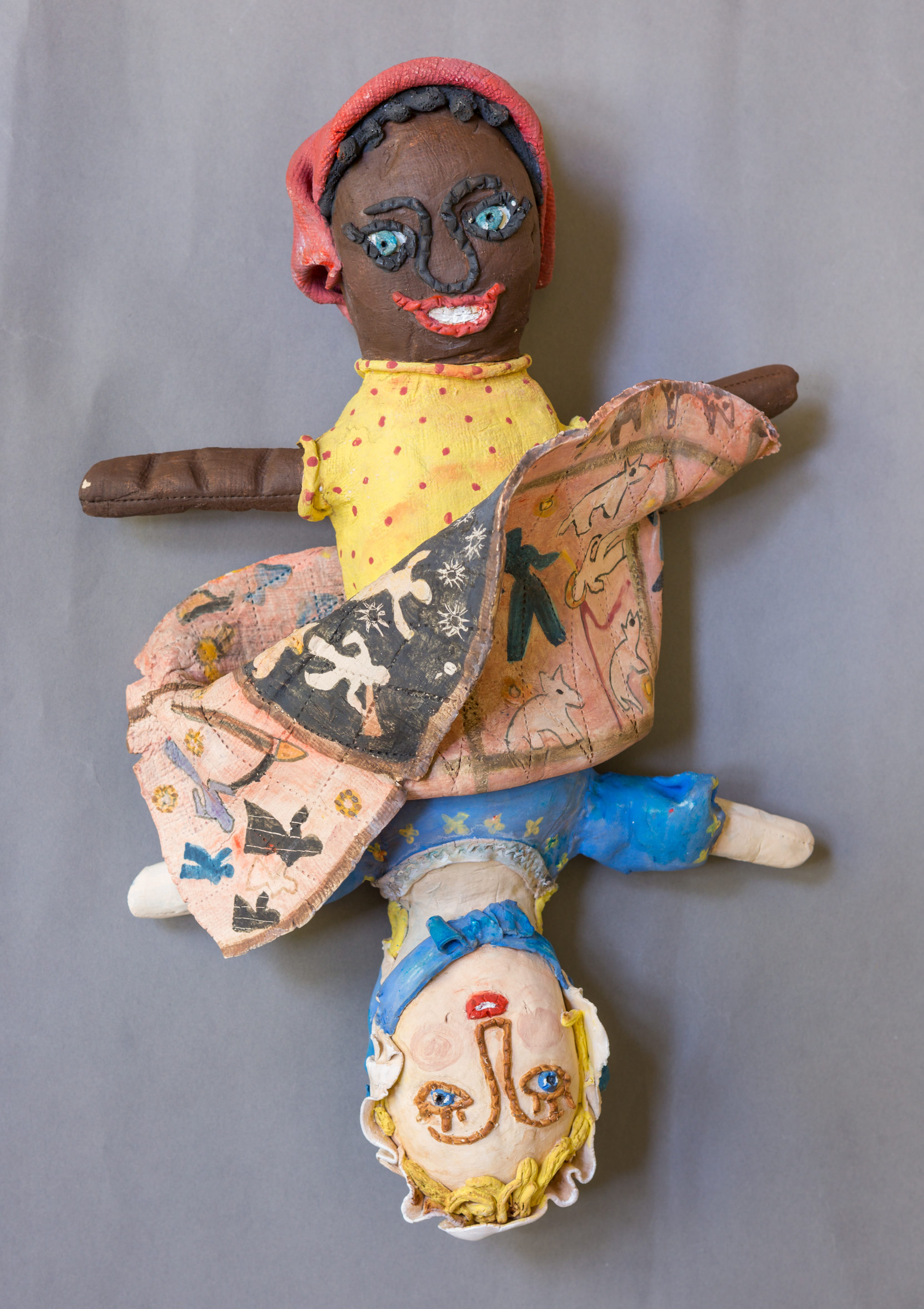
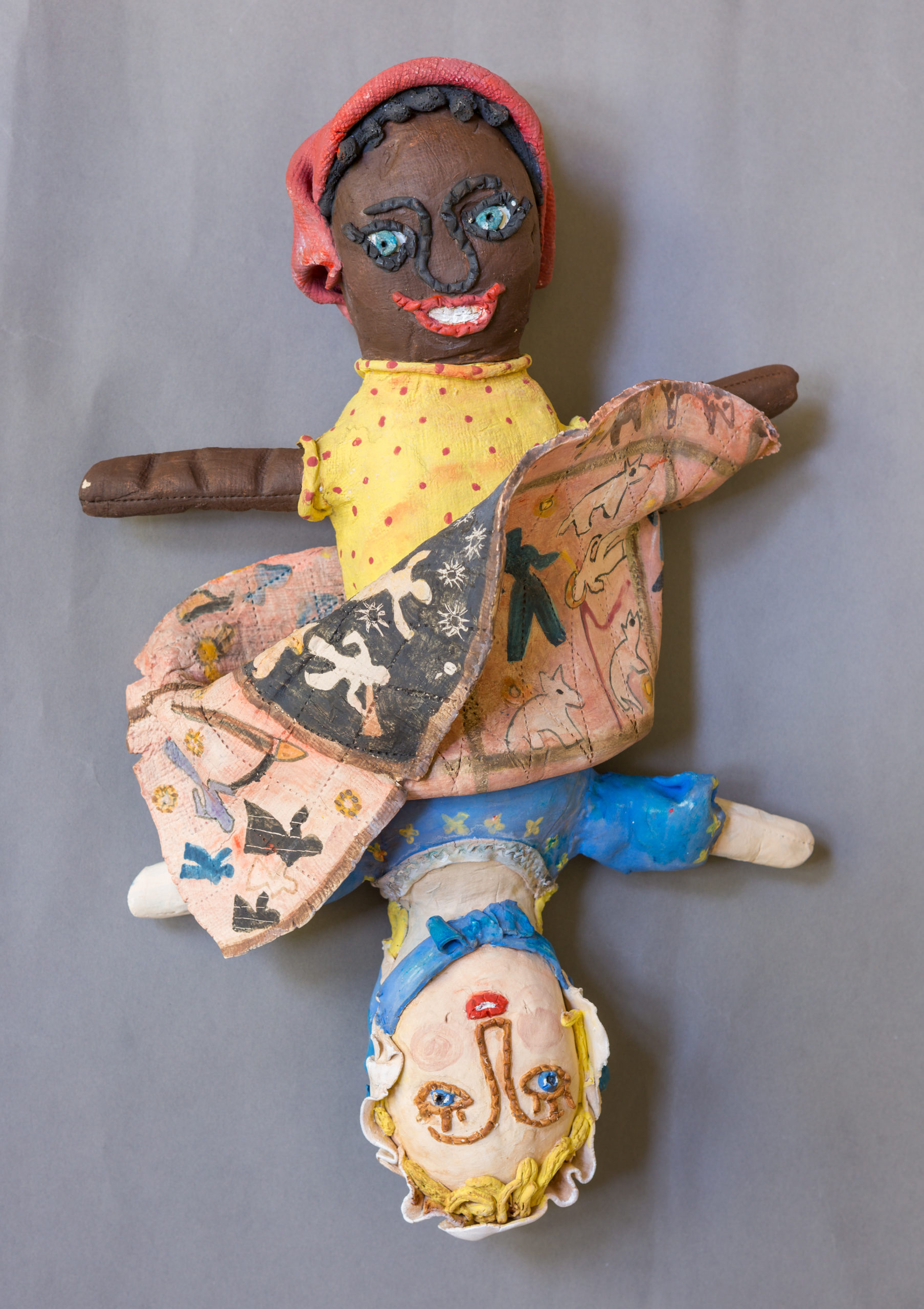
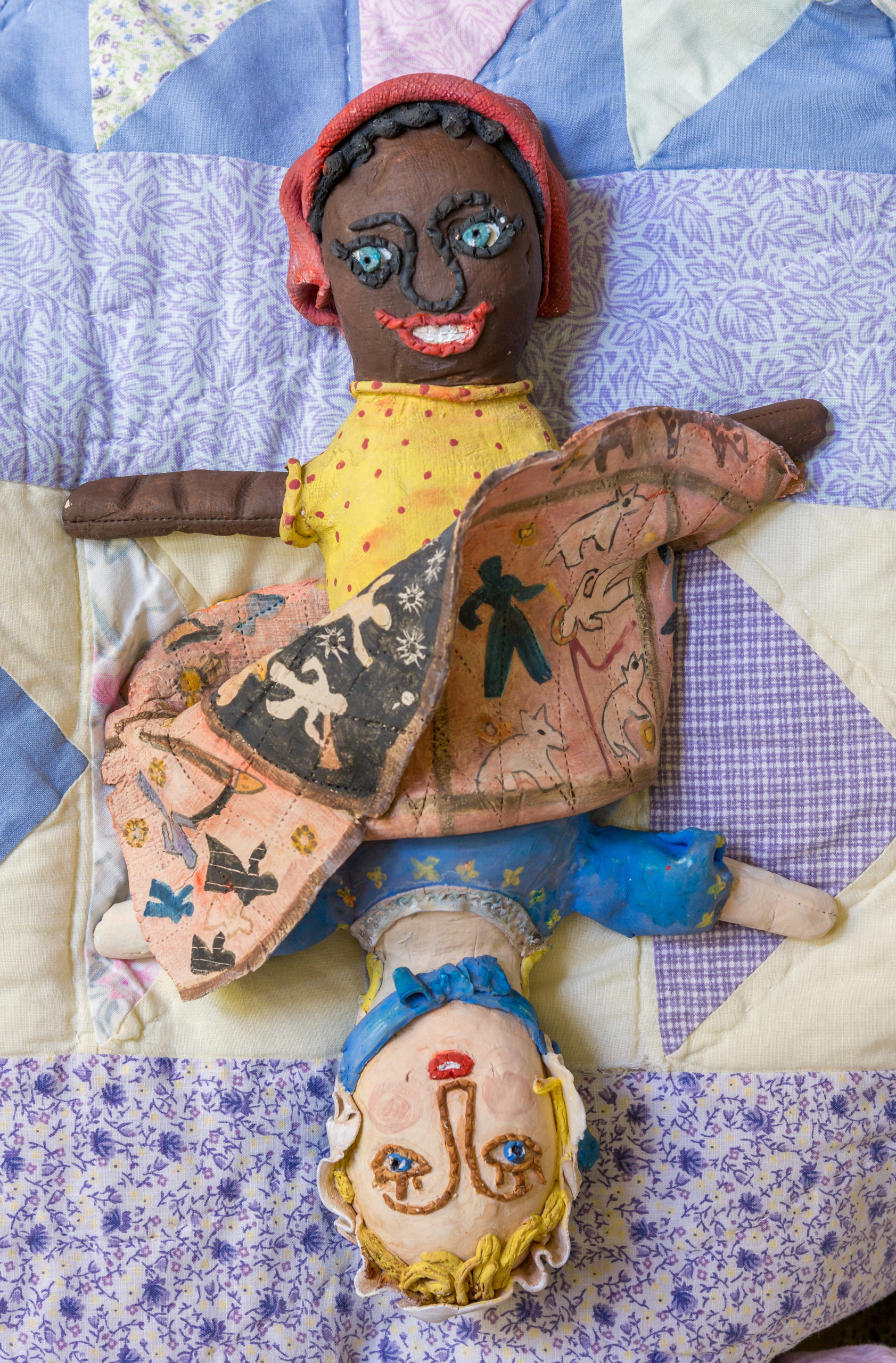
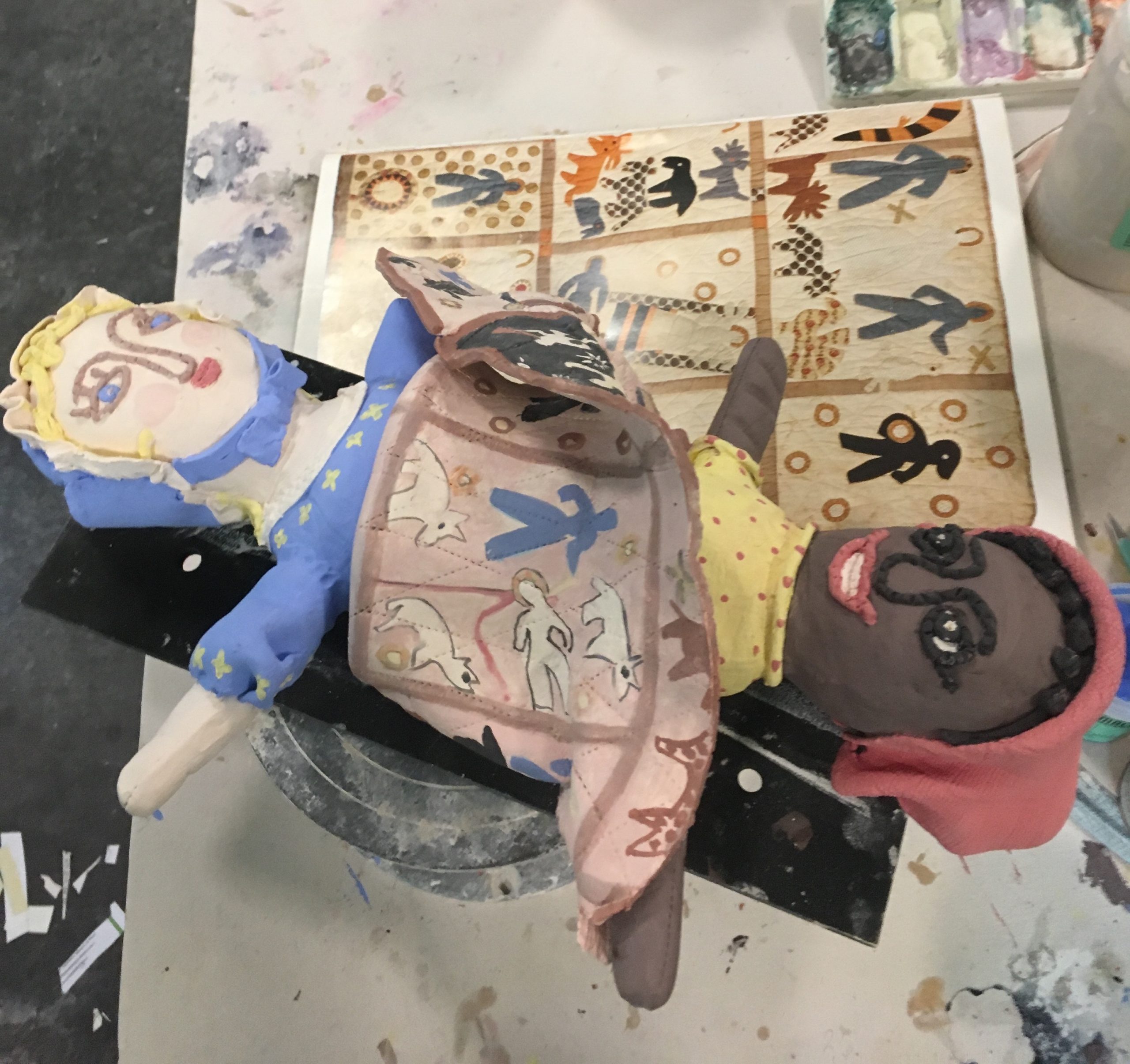
Several people recognize this type of rag doll from their childhood while others are appalled and think I made it up. Nope, and you can still buy them today in some historic house museum in Savannah. Doll historians believe this type of two-headed flip doll originated in the pre-Civil War era. Some call it a Topsy-Eva doll, after the child characters in Uncle Tom’s Cabin. Its purpose was perhaps instructional for young enslaved girls. First off, it taught them that black and white were linked, that they would grow up to care for both white babies and their own. And, that they might expect to bear the children of their white masters. Second, if it was forbidden for black children to have black dolls, the skirt could be flipped over in case the white mistress came in. But were topsy turvy dolls subversive? Did they reinforce racial and sexual power dynamics? Enslaved young girls on plantations were often paired with the similarly aged daughters of their owners to serve as playmate and later as servants. Perhaps the doll was meant for two girls together to explore their social divisions, or perhaps it was the means to forget them.39 Topsy-turvy dolls were born into an economy dependent on enslaved labor, and subsequently white scholars and preachers perpetuated the myth of inherent racial differences. There was a widespread fear of white and black bodies mingling, for that would turn the world order upside down. Yet these dolls did just that. It is curious that all examples I have seen of Topsy Turvy dolls show the two figures to be equal in size, if not in quality of clothing. In a landmark test, The Clark Doll Experiment,“40 psychologists asked black children to choose between a white doll and one painted brown (as no brown dolls were available.) This measured how segregation affected African-American children. The children’s impressions of two dolls were compared, and due to cultural conditioning, black children as well as whites had a strong bias toward the white doll. The experiment has been repeated up until 2010 with the same results. For my version of Topsy Turvy, I added imagery to the shared skirt, copying from freed woman Harriet Powers’s two Bible Quilts. Her figures look like Matisse’s—here you’ll see her images of Cain Killing Abel and Moses with the Serpent…brother killing brother, and liberation. (Jennifer pointed out that Matisse was influenced by African design). With the fabric doll, only one doll could be played with at a time. Made out of porcelain, the skirt does not move, giving more equanimity to it. This doll has become something of a mascot for If These Walls Could Talk. Among other things, it demonstrates that separate is never equal.