Rise and Shine
- 2018, Glazed porcelain with gold and white gold, in 10 parts.
- Installed, 10 parts: 21” x 30” x 20”
Box with lid up: L 21 x 16 1/2 x 12
Wingtips shoes: each approx. 4” x 12” x 4” - Available for Sale


Catalog Entry from If These Walls Could Talk Exhibit, Neill-Cochran House 2020:
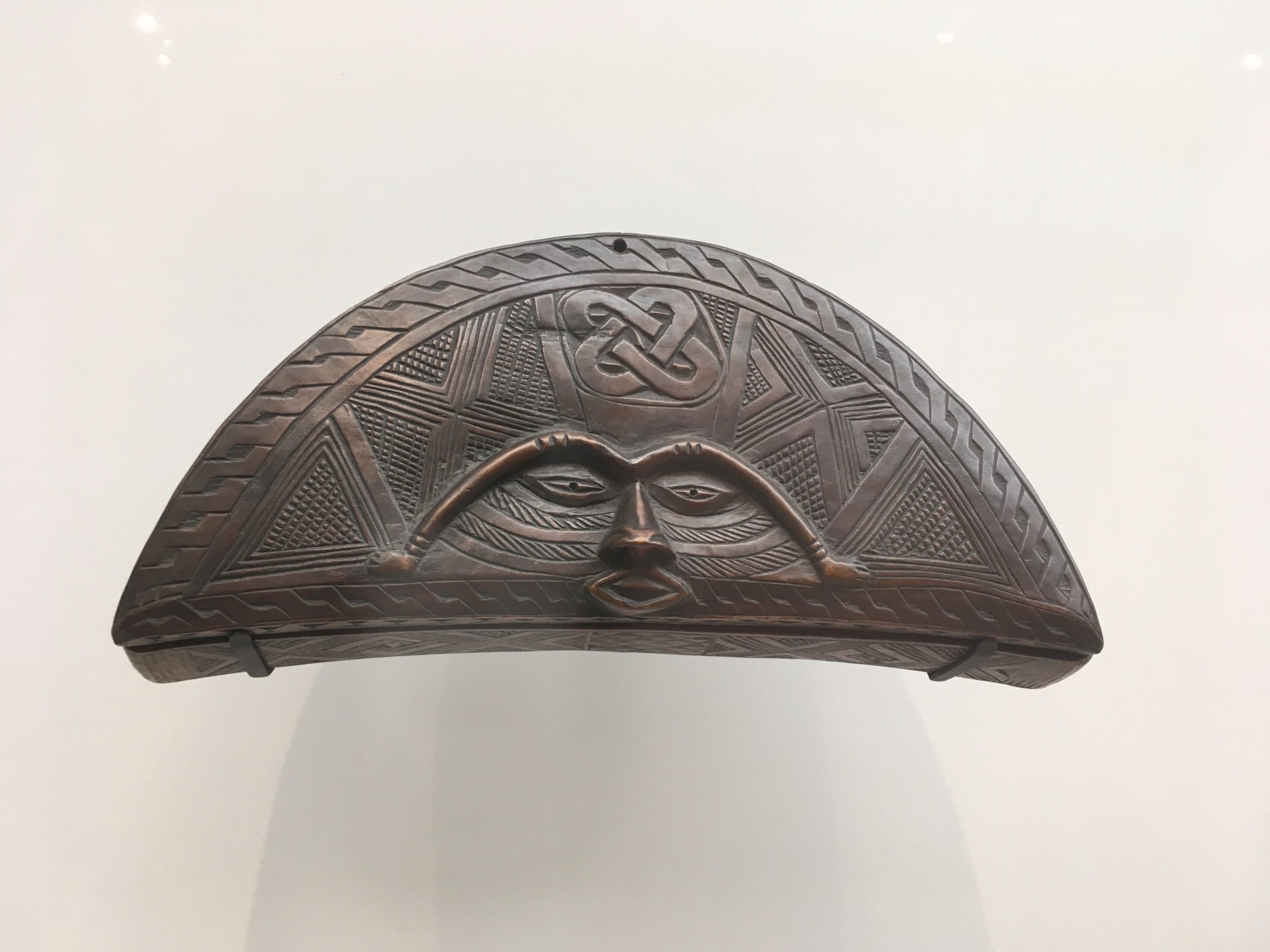
This is the sculpture that more or less spawned the collaboration for If These Walls Could Talk. It began with the idea of a vintage shoeshine kit and a vague image of a black boy in a train station, dancing as he shined shoes. Then associations piled on. First, it was high time I included more African-American art in my list of adaptations from art history. It’s an area of art I hadn’t studied much, but had begun to intrigue me after I saw two exhibitions in Brooklyn and New York City. At the risk of sounding monolithic, I sensed a raw cry throughout the work, like MLK, Jr.’s, term “the fierce urgency of now.” Then Jennifer and I reconnected at the Austin Contemporary one night. I blabbed about the shoeshine kit, the idea of Rise and Shine, and asked her if the gospel story of the Transfiguration had any special significance in black theology, as does the Exodus. She could think of none, but upon reading of MLK Jr.’s, speeches, someone present at his “mountaintop speech” said King was without a doubt transfigured, to the extent he glowed and had to be helped back to his chair.24 First I turned to African wood carvings in the Dallas Museum of Art and found a couple of Kuba pigment boxes, containers for colors used in ritual dances and costumes. Next, some research on Byzantine icons for a black Christ led to finding that Jesus appeared often in icons with dark skin. Common in Byzantine representations, The Transfiguration was the perfect image of Rise and Shine, as Jesus is lit up on a mountaintop in a revelation to his frightened disciples. Then he tells them to go down into the valley and commence their real work. (see Matthew 17) I found a shoeshine brush and rags and added a Horace Pippin Holy Mountain III painting to the brush. The shoe-sole-shaped prop on the back of the lid, where the customer’s foot goes, bears a copy of Romare Bearden’s collage. It is called Sunset and Moonrise with Maudelle Sleet. Nobody knows who Maudelle Sleet was, but to me this field worker at sunset stands in for the recent shock of discovery that my beloved hometown was likely a sundown town. Then, while searching online for vintage shoe polish, a discovery: none other than Muhammed Ali had a brand. Who knew? In black, white, and neutral, with his face on the can. As Jennifer says, Muhammed Ali was anything but neutral… The piece went together but was wobbly and the lid broke. To give it more stability, I later added a box within the box. That was a good excuse to include another African-American painting by Aaron Douglas, who was behind the Harlem Renaissance. Its title draws from the verse in Isaiah 60:1-1: Arise and shine! For Thine Light has come! 9. Martin Luther King, Jr., in his “March on Washington” speech, March 1963
Backstory Gallery