
Jacob’s Latter Pillow
- 1997, tinted porcelain with underglaze
- 4 1/4 H " x 21" x 18 1/2"

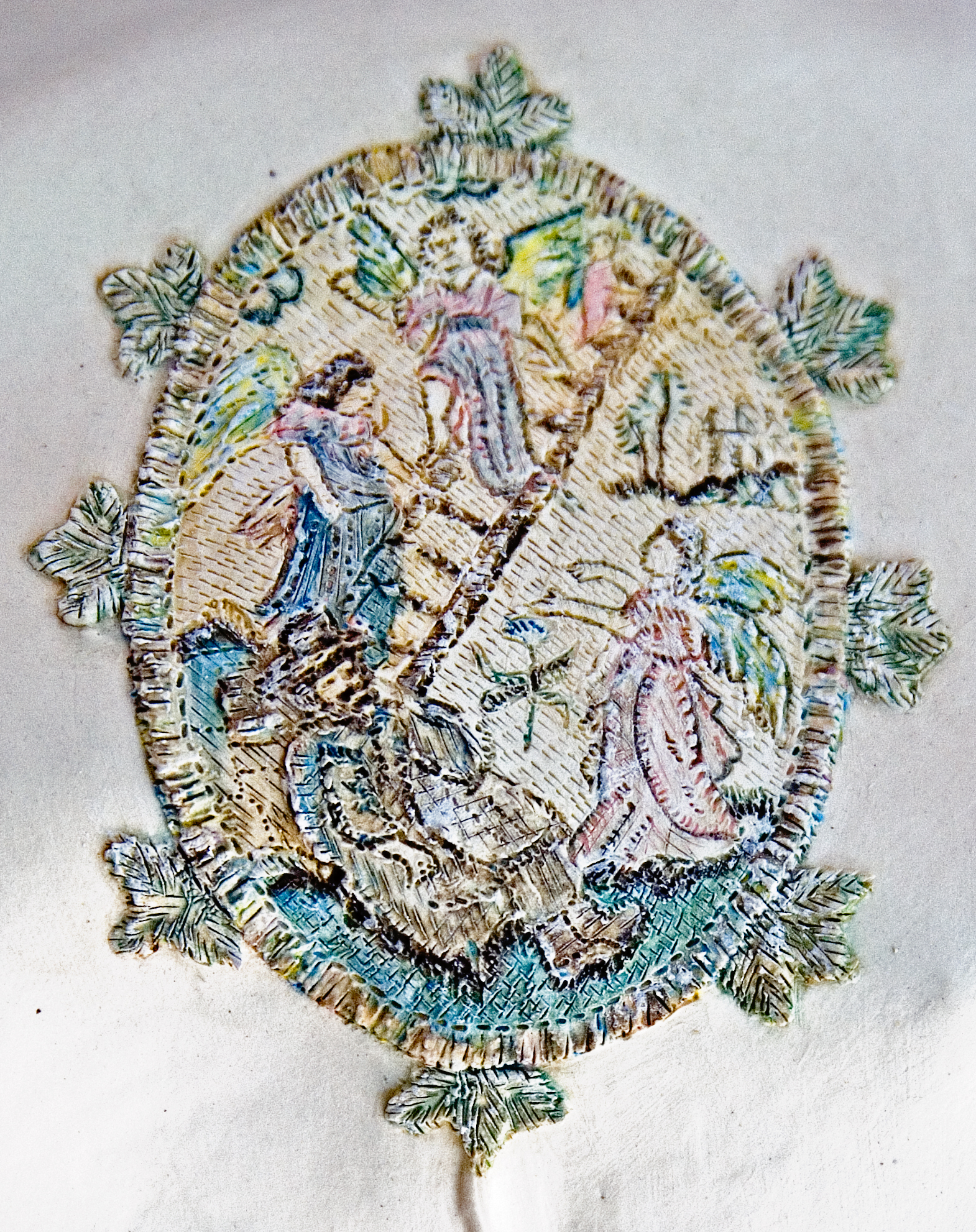


Catalog Entry from If These Walls Could Talk Exhibit, Neill-Cochran House 2020:
“This soft, squishy bed pillow was prompted by my own favorite pillow, the one that prevents a crick in the neck. I first conceived the piece to be a paean to pillows, to a good night’s rest, to sweet dreams, to the imprint of a loved one’s head. A celebration of the simple, the beautiful, and the good. It still does that, but then the patriarch Jacob entered the scene. The story of Jacob’s dream with the ladder of angels describes his very human need for sleep and inserts the necessary detail of a pillow, albeit a stone pillow, which doesn’t sound very comfortable, but then, neither are angels. After all, Jacob’s visions come during a lifetime of lying and cheating and all sorts of things that Biblical heroes aren’t supposed to do. This porcelain pillow is adapted from an old English embroidery, with the ladder of angels and a sleepy Jacob wearing a big hat. From a piece of crochet dating back to the 1930s, I copied a lace design that resembles a ladder, and applied this clay edging to the pillowcase. While working with the porcelain, a poem was growing. Another insistent pillow image came into focus: Mark’s version of the storm on the lake, where Jesus is asleep on a cushion. Both this and Jacob’s dream story evoke fear, and the poem seemed to call on Jesus for comfort. The poem felt “floaty,” as dreams do, and it took on the rocking motion of a boat or a cradle. Here I imagine that Jacob wrestles with thoughts, reviews his stormy life, and then is blessed to nod off and dream. (The Storm at Sea appears on Chlora’s Diary, No. 12 now installed on the pillow.) Remember the later part of Jacob’s story when he goes to Egypt at the request of his incognito son, Joseph, the skillful dream interpreter? Jacob’s stone pillow was back home, now an altar in Bethel, so perhaps he got a new one in Egypt. Could’ve been fine Egyptian cotton, which wasn’t grown in Palestine.” (Artist’s notes from 1997)
Backstory Gallery

