Custer’s Calling Card

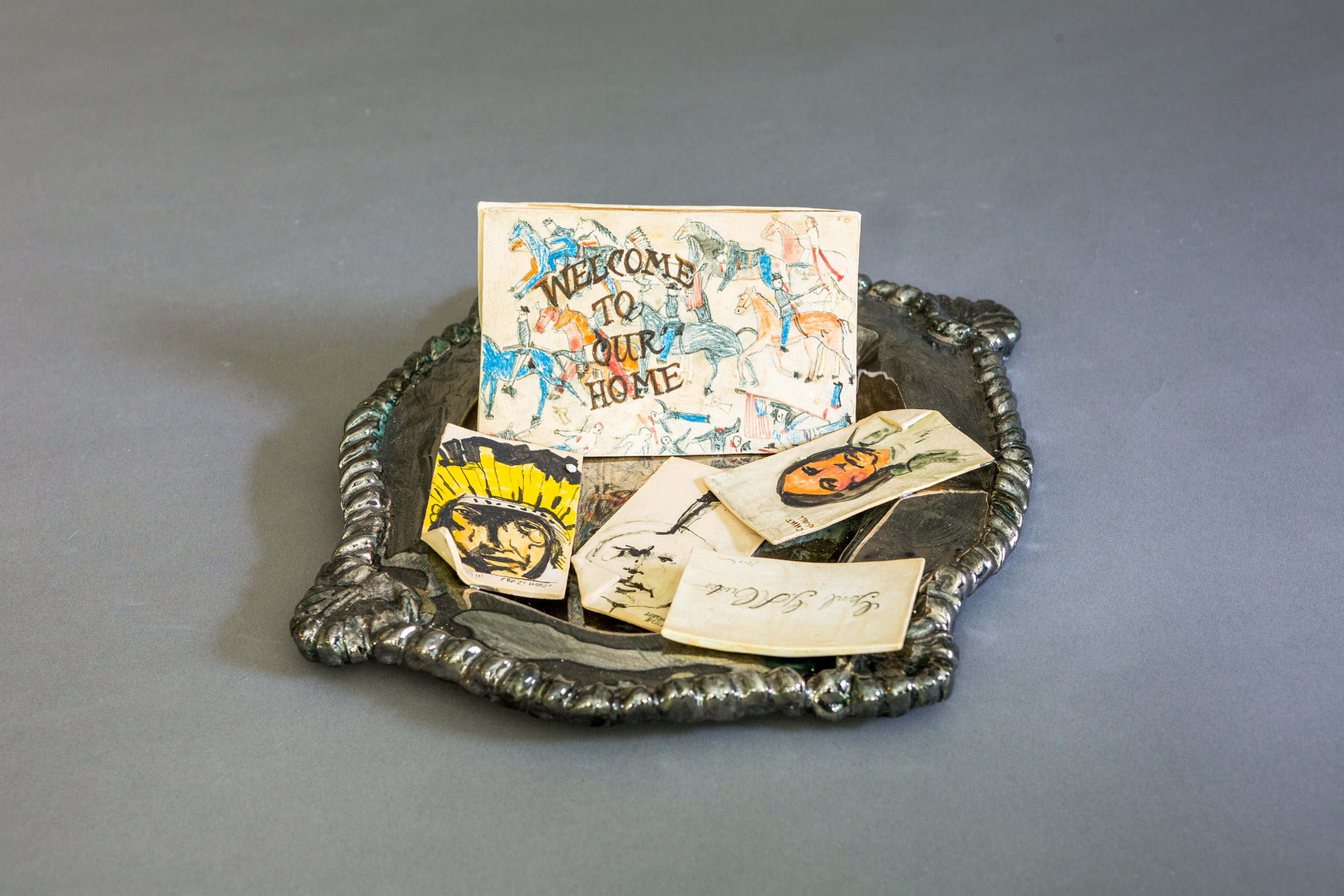
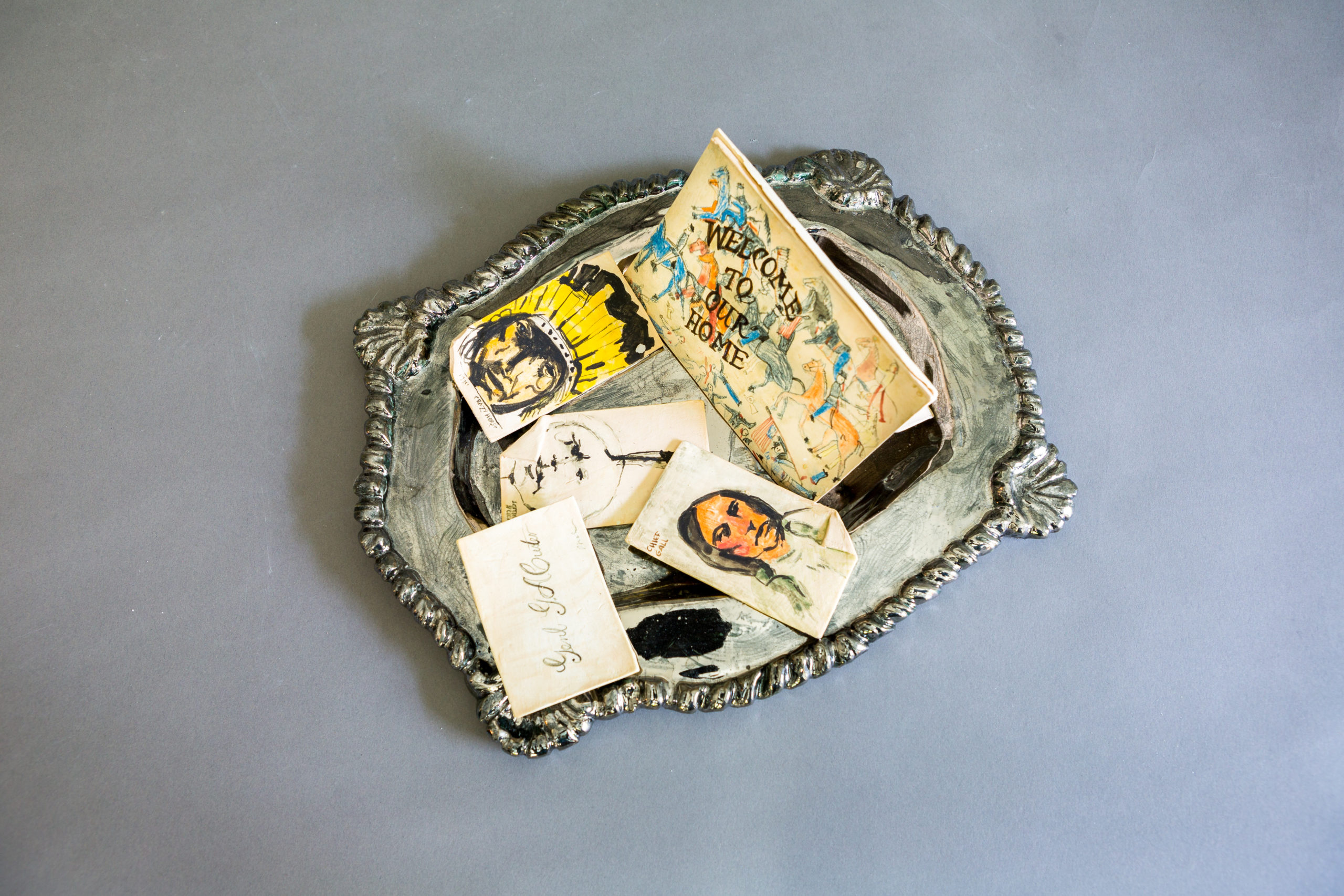
  • 2019, Glazed porcelain with white gold
  • 4” x 12” x 9 1/2”
  • Available for Sale

Catalog Entry from If These Walls Could Talk Exhibit, Neill-Cochran House 2020:

Colonel George Armstrong Custer was the most famous visitor to the Neill-Cochran House Museum. He visited it several times after it was retrofitted to be a hospital for his Federal soldiers stationed in Austin to keep the peace after the end of the Civil War. The soldiers—most of whom had served in Union army—were not receiving treatment for battle wounds from the Civil War, but rather for yellow fever they contracted along nearby Shoal Creek. It is interesting to think of how they were tended to here in a Confederate state. We think of Custer in relation to the infamous Battle of Little Big Horn, which occurred about ten years later up in South Dakota, after he was elevated to the rank of general. There his attempt to obliterate Native Americans turned on him, as he and his men were slaughtered on the spot by the Lakotas, led by three chiefs: Sitting Bull, Crazy Horse, and Chief Gall. The retribution for that became classic lore about how the West was won. This porcelain tray evokes an imaginary scene when Col. Custer made a “proper gentleman’s” call at this house. In Victorian times, small printed calling cards, the precursors to business cards still used today, were submitted to the butler at the front door. A corner fold alerted the master or mistress of the house the intention of the call, then the visitor would be admitted into the adjoining parlor. The welcome here for Custer is in the future, when he discovers that somebody else had been there first.

Backstory Gallery