Chlora’s Reinvented Wheel Barrow
- 2004, Glazed porcelain with acrylic
- 19" x 31" x 20"





Catalog Entry from If These Walls Could Talk Exhibit, Neill-Cochran House 2020:
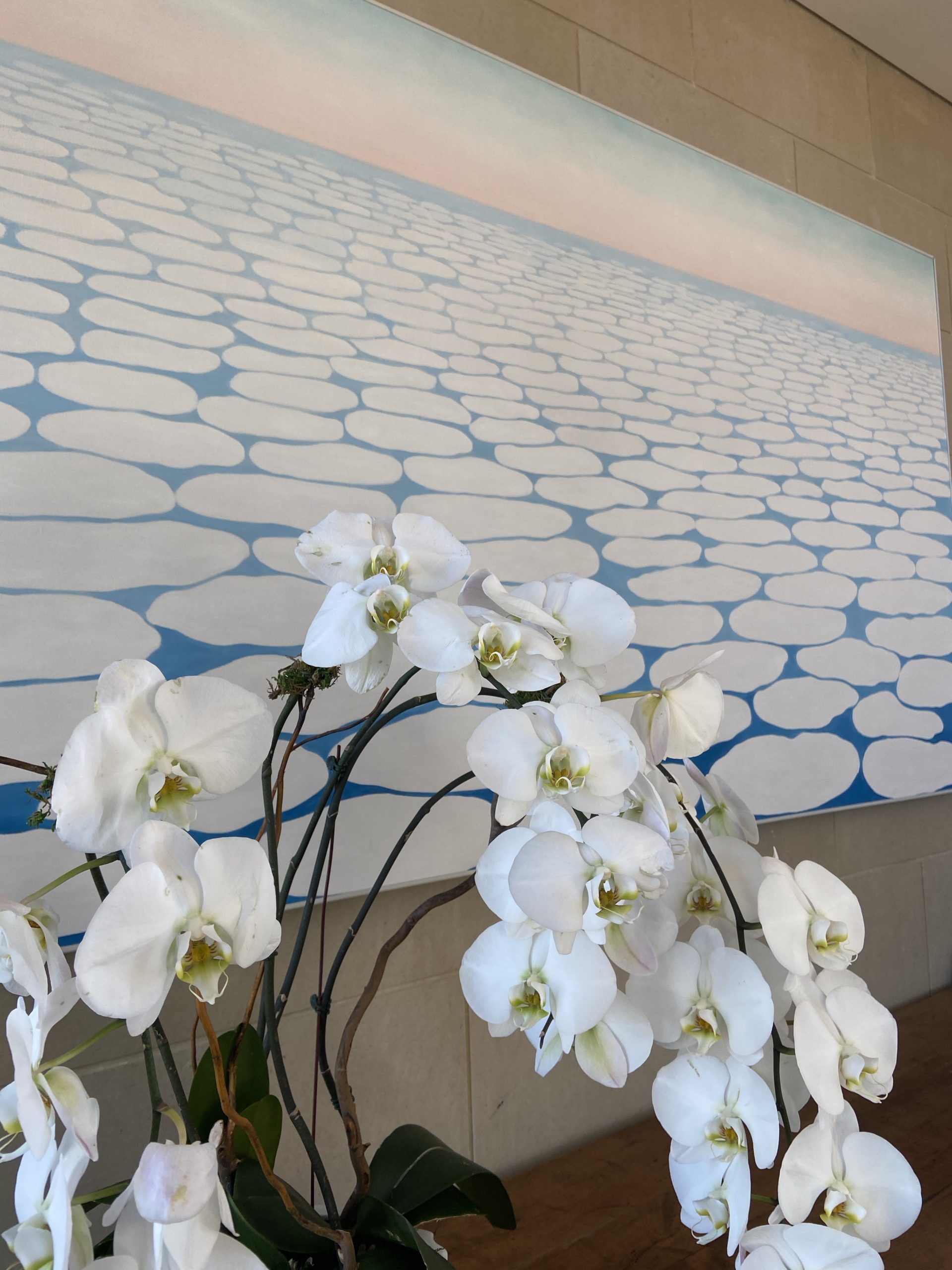
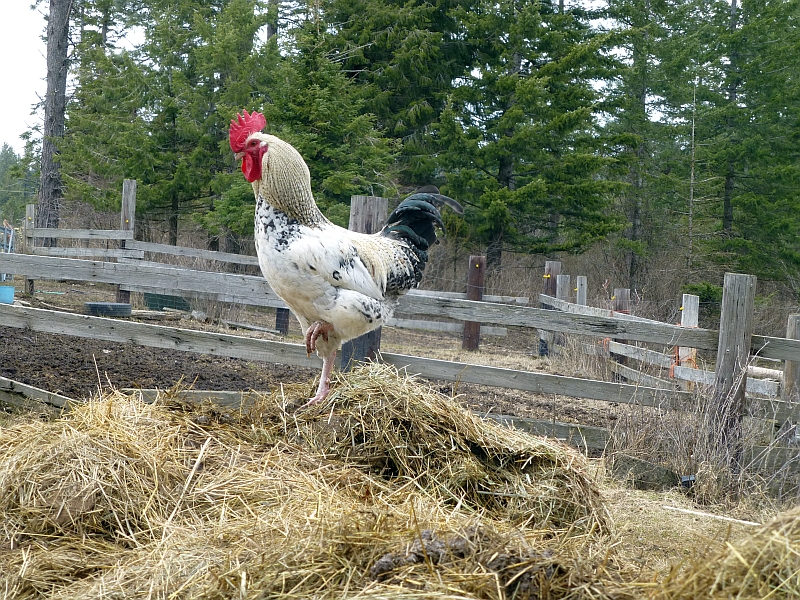
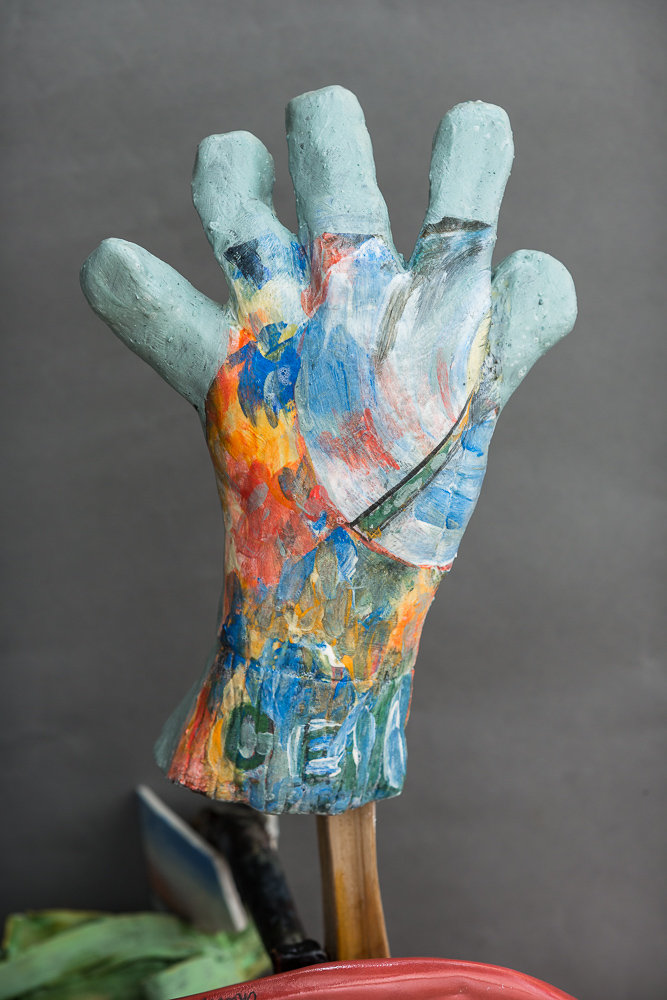
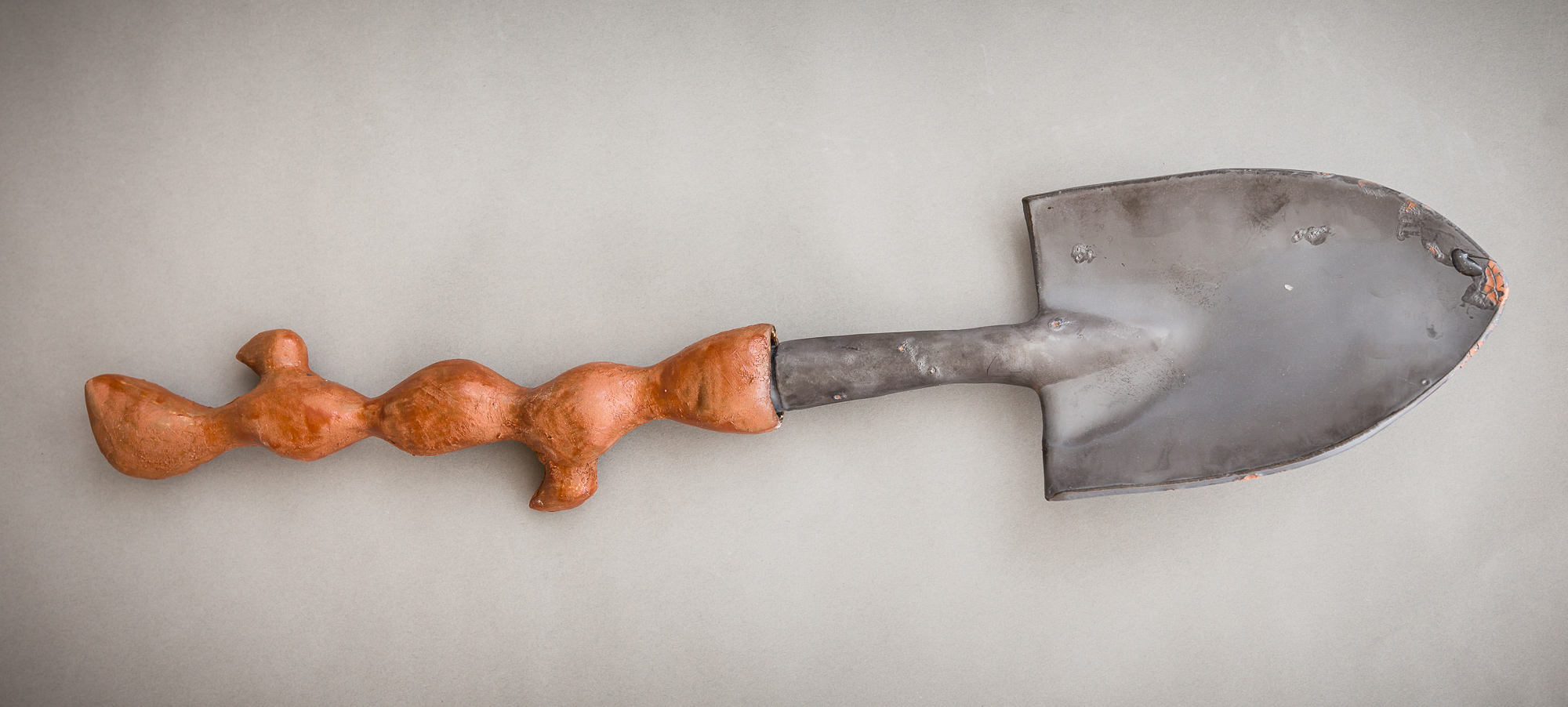
Chlora’s Wheelbarrow was badly broken when someone fell on it a few years after it was made. I put away the pieces and in 2015 began repairs. The piece was already about brokenness— note the cracked eggs, melons, and puzzle pieces of the O’Keeffe. The accompanying story had expanded in my mind, and it allowed some refiguring of the sculpture. It needed some strengthening from below, so I invented corncobs and strategically placed them for support. The handles of the wheelbarrow had broken so gardening gloves were added to cover them. The story delved into a compost pile, so a small shovel came into being. The unwieldy wheelbarrow had been abused by Chlora’s carelessness and greediness, and the new version seems to beg the question of generosity: what happens when greed and abundance coincide? The wheelbarrow is bewildering and busy, but it seems to bear its load with an awkward grace that has presence. Viewing the wheelbarrow installed below the scarecrow, their garden variety images meld. The wheelbarrow is on its way to the compost pile, with a shovel ready. I recently discovered that corn on the cob is a key symbol of Kwaanza—“muhindi” or “vibunzi” represents children and the future. Cantaloupes have long intrigued me, and in Chinese symbolism they stand for good health for the elderly, a sign of longevity. What is not obvious are the puns from literature: one, from the children’s story of Chicken Little whose sky is falling (hence the chunks of Georgia O’Keeffe’s Sky Above Clouds, III painting of clouds). Second, it alludes to my favorite poem by William Carlos Williams: “The Red Wheelbarrow.”
Backstory Gallery