
Chlora’s Creche
- 2001, Glazed porcelain with gold
- 12" H x 22" x 12"

Catalog Entry from If These Walls Could Talk Exhibit, Neill-Cochran House 2020:
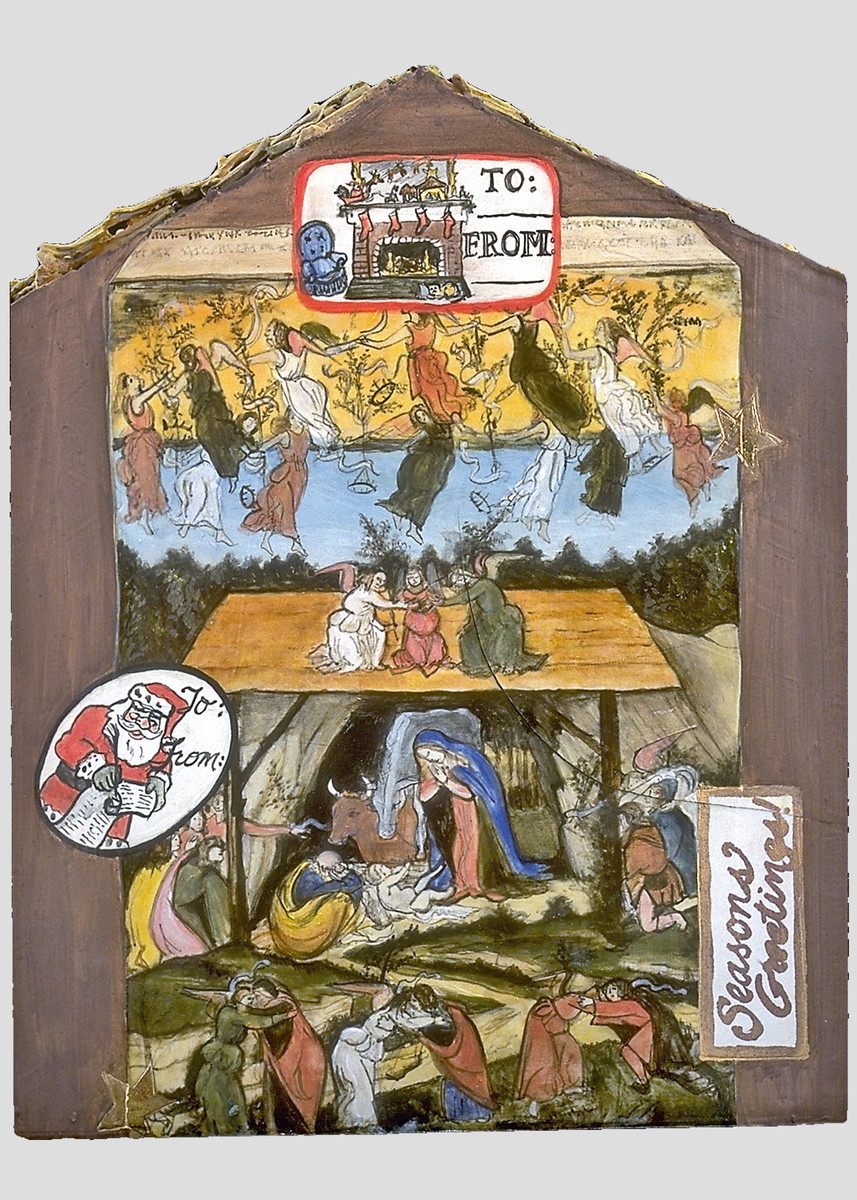
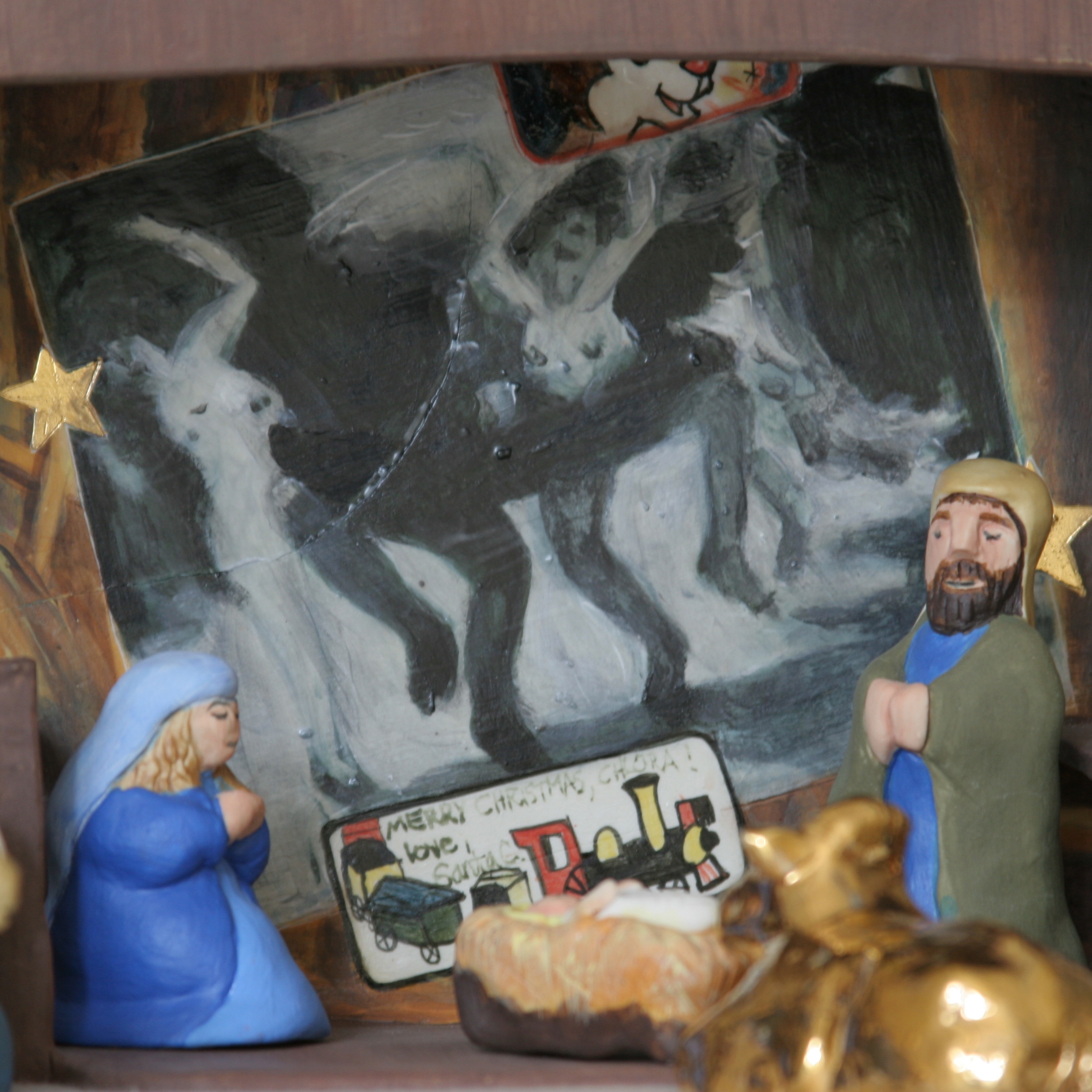
“Before I started this piece, I rambled to a friend about my ideas. It was September, and I told her I was scouring Goodwills for a tacky cardboard crèche from the 1950s. I wanted a model from my own childhood, the classic type with straw or moss on the roof and brightly painted plaster figures. My friend’s eyebrows shot up as her eyes widened. “I have one in my car.” Out in the parking lot she opened the trunk. The only thing in it was a 1950s nativity set, minus all the figures except a pink Baby Jesus in a scotch-taped manger. She had kept it in her trunk for months after cleaning out her mother’s home and didn’t have the heart to ditch it. This sign gave me the impetus to get started. Sometimes a piece continues to unfold for me months after it is finished, as a reminder that the call is ongoing. The crèche was more than a jab at holiday consumerism, so I was surprised when it suggested to me later that the golden calf is an agent of grace. The little calf wears her gold uncomfortably; idolatry scalds her, yet she kneels in humility at the scene. Why would Christ point out our idolatry to the manger rather than the cross? How does the incarnation transform the graven image? I’m uncertain, but the personal meaning was clear: Don’t confuse the call with the caller, or the gift with the giver. The second commandment jerked me back to the first commandment. The yearning to make meaningful art is not wrong, but it can override the yearning for God.” (GG, Image, 2002) The back of this piece is worth viewing in the mirror—the very detailed Mystical Nativity by Botticelli. Chlora stuck that on there in case the manger scene looked too folksy.
Backstory Gallery


