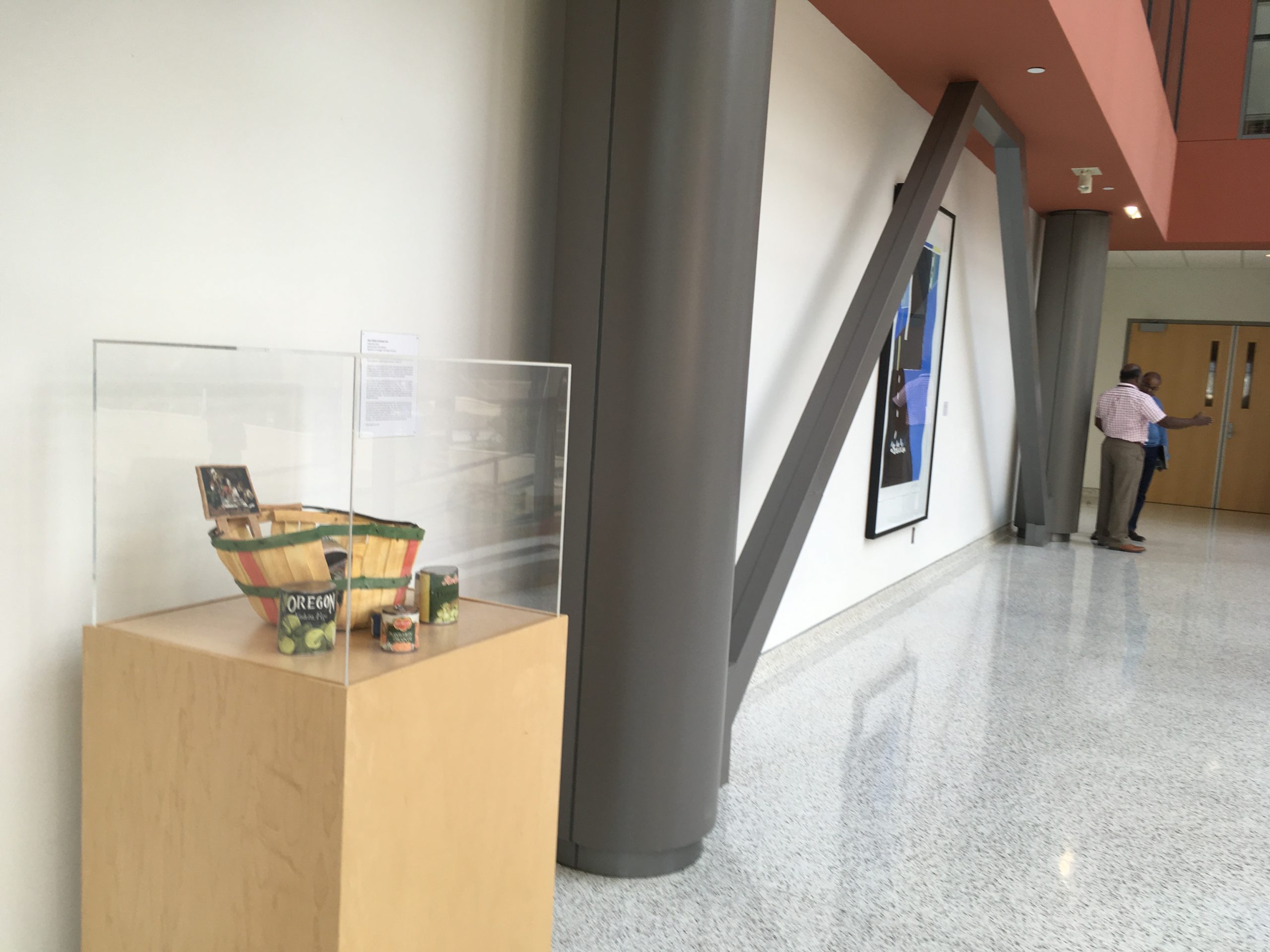
Amos’ Basket of Summer Fruit
- 2002, Glazed porcelain white gold, in 11 parts.
- installed app. 11 1/2" x 15 1/2" x 12"


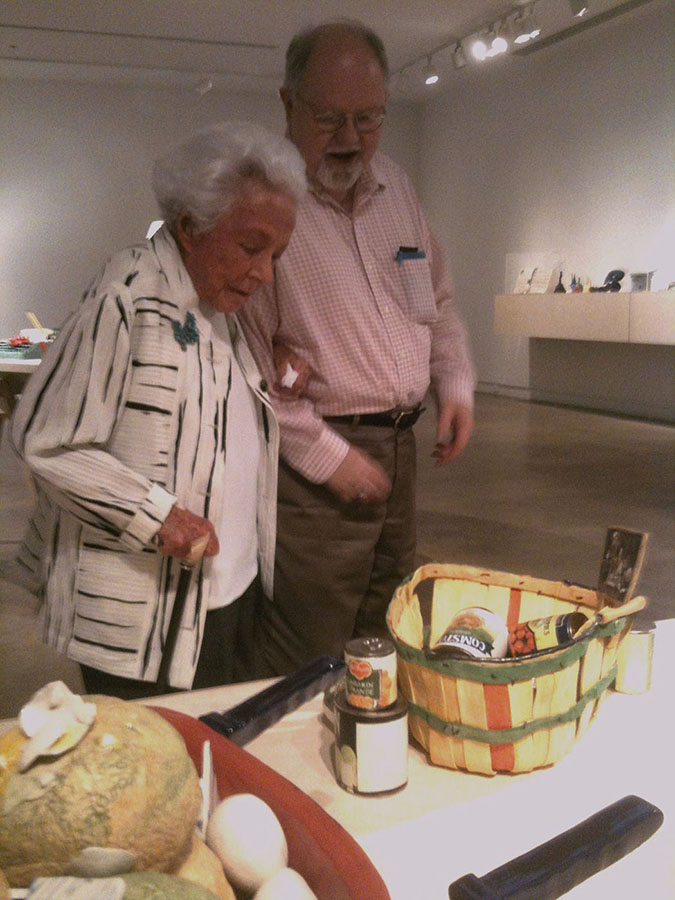
Catalog Entry from If These Walls Could Talk Exhibit, Neill-Cochran House 2020:
In 2002 I was in the midst of making this piece when asked to write a biographical piece for Image: Art, Faith, and Mystery. So I recounted a recent experience: “A friend caught me in the grocery aisle staring at an array of canned fruit. The spark of an idea for a new sculpture had just occurred to me, prompting research. She arched an eyebrow and continued shopping. After searching four stores, I found the nine kinds of canned fruit I needed as models for a new piece that touches on the fruits of the spirit. The cans will be jammed in an old basket like ones in rural markets, along with a cardboard sign bearing a rendition of Caravaggio’s Supper at Emmaus. On one level, in the aftermath of the 9/11 terrorist strikes, the whole idea now seems frivolous, but in another way the fruit basket is apt, since it zigzagged out of a prophet’s warning to a decadent culture. The Lord showed Amos, one of the harsher prophets, a basket of summer fruit as a warning of disaster for Israel. Some translators say the Hebrew phrase for “basket of summer fruit” is a rhyming pun on a word meaning “the end.” An image of abundance warned of destruction. (Amos 8:1-14) At Emmaus, not the fruit but the bread convinced the disciples that their mysterious guest was the risen Christ. If the fruits are canned, what does that say about the fruits of the spirit: love, joy, peace, patience, and so on? How should the cans be priced, or should they appear to be donations? (I could title the thing Amos’ Food Drive.) That is, assuming the piece makes it through the next firing....” (see Galatians 5:22-23— Fruits of the Spirit and Luke 24:13-35—Dinner in Emmaus) (story ending): “Back in the checkout line, with a basket full of cans, I wonder how many of these canneries exploit their workers. I regret I haven’t made time to be a more socially responsible consumer. But I have made time to listen to my work. The porcelain Amos basket fired badly. Its bottom cracked apart, so I was forced to come up with a new element to hold it all together. So now a pair of fruit picker’s work gloves is nestled inside the basket, palms up as if receiving the Eucharist. As Bill Moyers might say, it is being “helped by hidden hands.” I scan the headlines over the counter. Trivialities share space with atrocities. I place my yearning on the conveyor belt and look to the prophets for advice. I find old Moses on a mountain, staring off into the distance, squinting toward the promise. Was he wishing for binoculars?”
Backstory Gallery